Wheels of Glory! Blog

Blindness vs. Sight in the Spirit

Posted in Teaching & Musings | October 6th, 2020 | by
Glasses and book blurry vision

“Be Thou my vision, oh, Lord of my heart.  Naught be all else to me, save that Thou art.  Thou be my best thought by day or by night; waking or sleeping, my vision, Thou art.”

Spiritual blindness abounds in the body today, and in many varying forms and degrees.  One of my favorite passages of Scripture is John 9, when Jesus heals the man born blind.  After the healing, the man’s fallout with the religious scholars, and his removal from the synagogue, Jesus comes to find him and makes this radical statement: “For judgement, I have come into the world so that the blind will see, and those who see will become blind.”

Mountains and flowers

See, it’s only when we know how blind we are that we have the humility to let Jesus give us His eyes.

Why make those who ‘see’ blind?  Because they only think they can see.  Their pride has blinded them to the wonder and awe of the Gospel.  They’ve gotten lost somewhere along the way.  They can’t even identify Jesus for who He is.

“Trust in the Lord with all your heart, and lean not on your own understanding,” Proverbs 3:5 admonishes us.  “Trust.”  Don’t “Lean on your own understanding.”

It’s so easy to rely solely on our own experience and understanding of how the world or the Kingdom is supposed to work.  We think we’ve got  it all figured out.  Those who disagree with our theology are “wrong.”  We might even label them “deceived,” “demonically oppressed,” or “narcissists.”
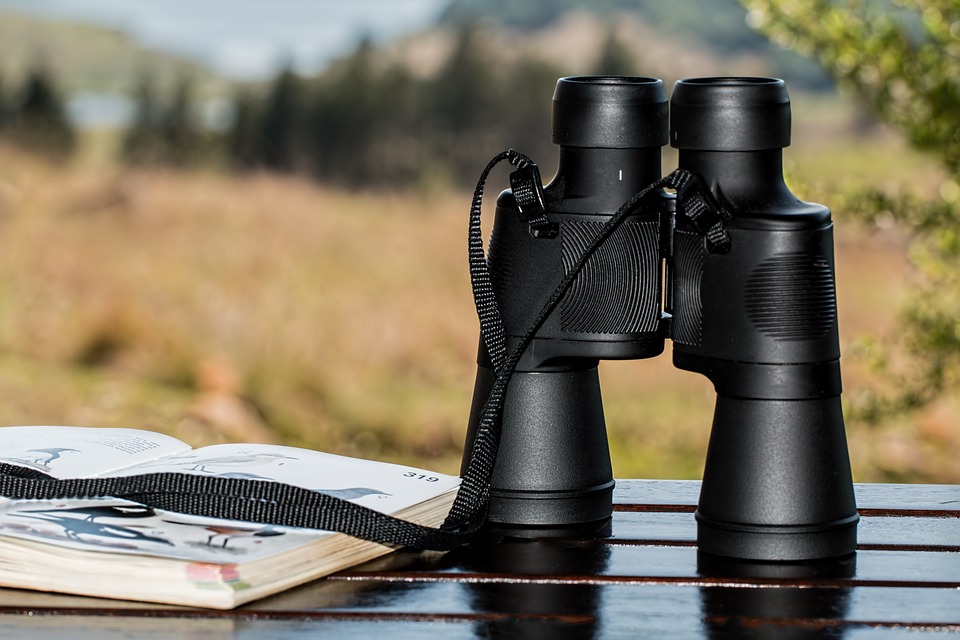
Binoculars

That’s not to say that deception, demonic oppression, or narcissists aren’t out there – they most certainly are.  But I think that one of the greatest deceptions out there is that we can see when we’re really blind.

In Jesus’s time, blindness didn’t mean quite the same thing that it does today.  Blindness essentially meant that you couldn’t see well enough to perform normal tasks.  Because there were no such things as corrective lenses, that meant if you had astigmatism or were near or farsighted, you were labeled blind.  For example, I wouldn’t have been blind because my vision isn’t that bad (though I wear corrective lenses).  My mom, on the other hand, can’t function normally without her glasses, and in Jesus’s time, she would have been considered blind.

As I said earlier, blindness comes in varying degrees, just as it did in Jesus’s time.  The same principle applies here: we’re all suffering from one degree of blindness or another.  “Now we see dimly, as in a mirror,” Paul said in 1 Corinthians 13.  Our understanding of the Kingdom – of anything – is fuzzy at best.

Road, lake, and tree in the spring sunshine

Blindness isn’t (obviously) desirable.  But in our quest for sight, let’s not forget that it is only the revelation of the Holy Spirit that can give us true sight.  He’s the only one who can help us understand, and He gives us knowledge so that we can see.

From this story of the man born blind, one might almost infer that this man’s faith and thankfulness (his worship) were what gave him his spiritual sight.  Doubt and unbelief were what blinded the religious scholars.  They put too high and emphasis on proof and not enough on trust.  I love how an ignorant, blind beggar knew more about the Kingdom of God than the scholars did.  One touch from Jesus and this man knew who’d touched him.  He may not have known who Jesus was or that Jesus was the Son of God, but he knew that God had healed him.  I wonder if this was when he received the revelation of who God is.

Man holding candle in his hands

Ask God to show you where you are blind – where you have doubt and unbelief that will prevent you from seeing clearly.  Often, we can’t identify them ourselves because we can’t see them.  We have to have the humility to admit those places when we ask, thought.  Admitting that we’ve been wrong takes considerable humility – and it’s an area that I think that most people are still working on.  I know that I am!

God, open my eyes to see the truth.  Don’t let me be too proud to admit that I’m wrong.  Help me to identify areas of blindness.  Give me light to illuminate those places.  Help me not to judge others for their blindness since I know that I’m in the same boat.  We’re blinder than bats without You.  In Jesus’ name, Amen.

All photos courtesy pixabay.com

Wheels of Glory! Blog

Wisdom: The Opposite of Pride: Entitlement – VOTD.11.20.17

Posted in Verse of the Day | November 20th, 2017 | by

In humility value others above yourselves. Philippians 2:3

Most Christians are aware that the law and God’s grace are at odds with each other. The best thing that often comes from attempting to follow the biblical law is that we learn that we can’t do it…leading us to surrender to the grace of God and find His yoke is easy and His burden light.

Entitlement worse in so many ways. It is more at odds with God’s grace than the law, and it doesn’t easily lead us to surrender to God’s grace, either. At its core, the Gospel is that we are not entitled to anything, except just punishment for our sins (Rom 3:236:23). Entitlement rejects that truth.

As today’s verse shows, self-sacrifice stems from a humble heart. Entitlement is rooted in a prideful heart. We deceive ourselves into thinking we deserve better than we have: More love, success, comfort, accolades, more attention from people, and ultimately, we think we deserve God’s grace (which is an oxymoron).

Oh, yes… And we think we don’t deserve suffering, heartbreak, or correction. So when we do experience these things, we grow bitter, frustrated, and disturbed because we believe we’re entitled to a life that is more focused on ourselves and the people we love, and less focused on people we disagree with. We tacitly ignore that we deserve nothing. Apart from Jesus’ grace, we deserve condemnation.

Note: we are often better at covering up our spirit of entitlement in areas of what we deserve better than covering up our spirit of entitlement in areas of what we don’t deserve. Yet the presence of the latter always points to the former. (more…)

Wheels of Glory! Blog

Wisdom: The Opposite of Pride – VOTD.11.14.17

Posted in Verse of the Day | November 14th, 2017 | by

Be clothed with humility, for God resists the proud, but gives grace to the humble. Therefore humble yourselves under the mighty hand of God, that He may exalt you in due time, casting all your care upon Him, for He cares for you. 1 Peter 5:5-7

For the most part, pride is the opposite of wisdom. Wisdom and humility are often connected in the Bible and this is no coincidence. The reason: Pride leaves us vulnerable to just about every other root sin. Pride both drives us to sin and leaves us addicted. Pride destroys us. Here’s why:

Pride produces a self-righteousness, hypocritical spirit:
When we’re proud, we elevate our status in our own eyes. This makes us repugnant to the people around us (unless they’re playing along for what they can get out of it). Worse yet, pride has no room for the mercy of God. When we think we’re better (holier, closer to God) than everyone else, we’re incapable of not finding fault with others—while being blind to our own faults and weaknesses. We become slaves to our own pride. It’s a compulsion.

The Pharisees’ pride blinded them to their own sin and far worse, it blinded them to God’s mercy. It drove them to be callous and brutal toward others when they knew that loving their neighbor as themselves was God’s requirement. Jesus said: “Woe to you, scribes and Pharisees, hypocrites! For you are like whitewashed tombs, which outwardly appear beautiful, but within are full of dead people’s bones and all uncleanness” (Mat 23:27). The vicious cycle here was that pride left them defenseless to sinful temptations like hate, and then they had to cover their sin to protect their pride. They were trapped—prisoners of their own egos.

Pride naturally leads to rebellion:
Rebellion is the reflex response of pride in our hearts. Rebellion says, “I know better than God,” when we don’t. Often prideful rebellion blinds us to what is in our own self-interest. But even when we can see what would be best for us, a rebellious heart prevents us from doing it. (more…)